Fall Shedding Is a Signal, Not Just a Mess


Vet Reviewed by Dr. Jacob Klos, DVM

Your dog is shedding their summer coat and growing their winter one. This process, driven by changes in daylight rather than temperature, is one of the most nutritionally demanding events of the year for your dog's body. Here's what healthy looks like, what doesn't, and how to support it.
What's happening during fall coat transition
As daylight hours decrease, your dog's body receives signals (via melatonin) to shed the lighter summer coat and grow a denser winter coat. This transition can take 2 to 6 weeks depending on breed, health, and nutritional status.
Growing a new coat is resource-intensive. Hair is made primarily of protein (keratin), and the process requires significant amounts of omega-3 and omega-6 fatty acids, zinc, biotin, and other nutrients. If these nutrients are in short supply, the body prioritizes vital organs over coat production.
Signs of healthy vs. unhealthy shedding
Healthy: Shedding is manageable (not overwhelming), new growth comes in dense and shiny, skin underneath is smooth and hydrated, the transition completes within a few weeks.
Unhealthy: Shedding seems excessive and prolonged, new coat looks dull or thin, skin is dry/flaky/irritated, patches of uneven growth, persistent dandruff.
Why coat quality reflects overall health
The coat is often called the "window to internal health" in veterinary medicine. Because the body deprioritizes coat production when resources are scarce, a dull or thin coat is frequently the first visible sign of nutritional insufficiency.
Dogs with adequate protein, omega-3 fatty acids, zinc, and B vitamins consistently produce healthier coats than dogs lacking in these nutrients, even when both are on "complete" commercial diets. The reason: commercial diets meet minimum standards, but minimum isn't always enough during high-demand periods like coat transition.
How to support fall coat transition
Brush daily: Regular brushing removes dead coat, stimulates blood flow to the skin, and distributes natural oils. 5 minutes daily is more effective than one long session per week.
Don't over-bathe: Bathing strips natural oils that the skin needs during coat transition. Once every 3 to 4 weeks with a gentle shampoo is sufficient unless directed otherwise by your vet.
Support from the inside: Omega-3 fatty acids (EPA and DHA from fish sources) are the single most impactful nutrient for coat quality. They support the structural integrity of hair follicles and the moisture balance of the skin. Quercetin provides antioxidant support that protects skin cells during the regeneration process. Probiotics support the gut-skin axis, ensuring that systemic inflammation doesn't interfere with healthy coat growth.
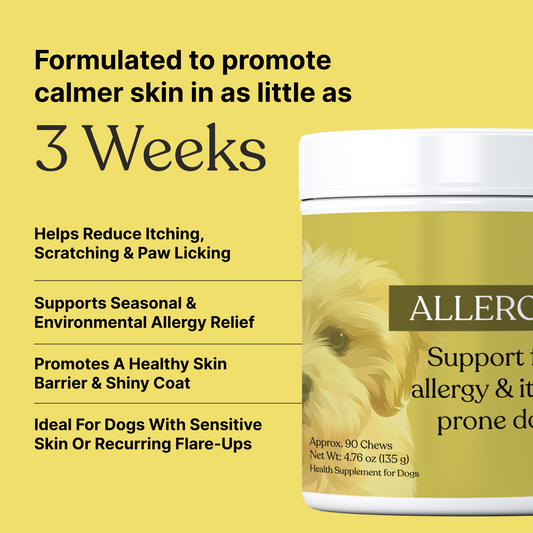
Our Allergy & Itch Chews deliver all three in one daily chew. Consistent daily use during fall coat transition gives the body the building blocks it needs to produce a dense, glossy winter coat.
Sources:
- AKC: Seasonal shedding in dogs, coat health indicators
- Veterinary Dermatology journal: Omega-3 supplementation and coat quality
- Veterinary nutrition literature on nutritional demands during coat transition
- Veterinary dermatology literature on coat as an indicator of systemic health