The End-of-Summer Joint Check Your Dog Needs


Vet Reviewed by Dr. Jacob Klos, DVM

August is the right time to assess how your dog's joints handled the summer. Three months of increased activity, impact, and heat have stressed the musculoskeletal system in ways that may not be obvious yet. A quick at-home check can catch early signs before they progress.
The 5-minute at-home joint assessment
You don't need equipment. You need 5 minutes and your attention.
Watch them rise from rest: After your dog has been lying down for at least 30 minutes, watch how they get up. Stiffness, slow rising, or hesitation to bear weight on a specific leg are early indicators of joint discomfort. Compare what you see now to what you remember from spring.
Watch them walk on a flat surface: On a leash, walk your dog on a flat surface at a normal pace. Watch from behind and from the side. Look for: shortened stride on one or more legs, head bobbing (the head drops when the sound leg hits the ground, rises when the painful leg hits), or a subtle limp that appears then resolves after a few steps.
Watch them go up and down stairs: Stairs amplify joint discomfort. A dog that hesitates, takes stairs one at a time instead of bounding, or avoids stairs they used to take easily is signaling discomfort.
Watch them jump: Getting into the car, onto the couch, or onto the bed. Hesitation, refusal, or "bunny hopping" (using both rear legs simultaneously instead of pushing off one at a time) all suggest rear joint involvement.
Feel for heat and swelling: Run your hands gently along the shoulder, elbow, hip, and knee joints on both sides. Compare left to right. Warmth, puffiness, or flinching when you touch a specific joint warrants a vet conversation.
What these signs mean
If your dog shows none of these signs, their joints handled summer well. Maintaining daily joint support keeps them that way.
If your dog shows one or two subtle signs, this is the early intervention window. The joint is experiencing enough change to alter behavior, but you've caught it before it becomes a significant problem. This is exactly when daily supplementation with glucosamine, chondroitin, MSM, and omega-3s makes the most impact.
If your dog shows multiple signs or obvious lameness, schedule a vet visit. Your veterinarian can assess joint health through physical examination and, if needed, imaging.
Why August is the critical check-in
Most owners don't assess joint health until a dog is visibly limping. By then, structural changes in the joint are often well underway. August is the inflection point: summer's activity has stressed the joints, and fall's cooler weather can mask stiffness with reduced outdoor time. Checking now catches issues in the window where intervention is most effective.
Supporting joints through the transition
Daily joint support isn't just for dogs with obvious problems. Glucosamine supports cartilage maintenance. Chondroitin helps retain moisture in the cartilage for shock absorption. MSM supports connective tissue flexibility. Omega-3 fatty acids support a healthy inflammatory response. These ingredients work cumulatively with consistent daily use.
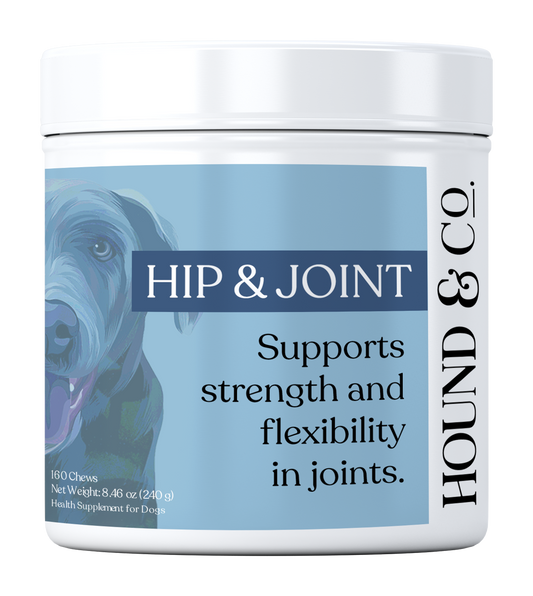
Our Hip & Joint Chews deliver veterinary-strength doses of all four, designed for dogs of all sizes, especially after a demanding summer.
Sources:
- AKC: Signs of joint discomfort in dogs, at-home mobility assessment
- Veterinary orthopedic literature on early detection of osteoarthritis in canines
- Veterinary sports medicine literature on activity-related joint stress
- Veterinary nutrition literature on glucosamine, chondroitin, and MSM supplementation