Vet reviewed
Dr. Jacob Klos, DVM
Veterinarian & co-formulator of Hound & Co
Your dog is building a new coat right now. Whether it comes in thick and glossy or thin and dull depends almost entirely on nutrition. Here's what the process requires and how to make sure your dog's body has it.
Why winter coat quality varies
Every dog grows a winter coat. Not every dog grows a good one. The difference isn't breed (though breed matters for density). The difference is whether the body has adequate nutritional resources during the building phase.
Coat production is considered "non-essential" by the body. When nutrients are scarce, the body redirects them to vital functions (organ maintenance, immune function, metabolic processes) and deprioritizes coat and skin. This is why nutritional deficiencies show up in the coat before they show up anywhere else.
The nutrients that drive coat quality
Omega-3 fatty acids (EPA and DHA): These are the most impactful nutrients for coat quality. They support the structural integrity of each hair shaft, the moisture balance of the skin underneath, and the inflammatory response that can interfere with healthy coat growth. Fish-sourced omega-3s (salmon oil) are more bioavailable to dogs than plant-sourced alternatives.
Zinc: Essential for skin cell turnover and hair follicle function. Zinc deficiency is one of the most common micronutrient deficiencies in dogs and presents as dull coat, slow hair growth, and flaky skin.
Biotin: Supports keratin production, the protein that makes up the structure of each hair. Biotin deficiency leads to brittle, breaking hair and slow regrowth.
Protein: Hair is approximately 95% keratin. Without adequate dietary protein, the body simply cannot produce coat at the rate or quality it needs.
Why commercial diets may not be enough
Most commercial diets meet AAFCO minimum standards for vitamins and minerals. But minimum standards are designed to prevent deficiency, not to support optimal function during high-demand periods like coat transition.
During coat transition, the body's demand for omega-3s, zinc, and biotin increases significantly. A diet that provides "enough" during normal periods may not provide enough during the 4 to 6 week window when the body is actively building a new coat.
How to support winter coat production
Supplement with omega-3s daily: Consistent daily intake of fish-sourced omega-3s provides the sustained building blocks the coat needs. Sporadic supplementation doesn't allow levels to build to effective concentrations.
Brush daily: Brushing removes dead coat, stimulates blood flow to the skin, and distributes natural oils. This supports the coat transition mechanically while nutrition supports it internally.
Avoid over-bathing: Bathing strips natural oils. During coat transition, limit baths and use gentle, moisturizing shampoos.
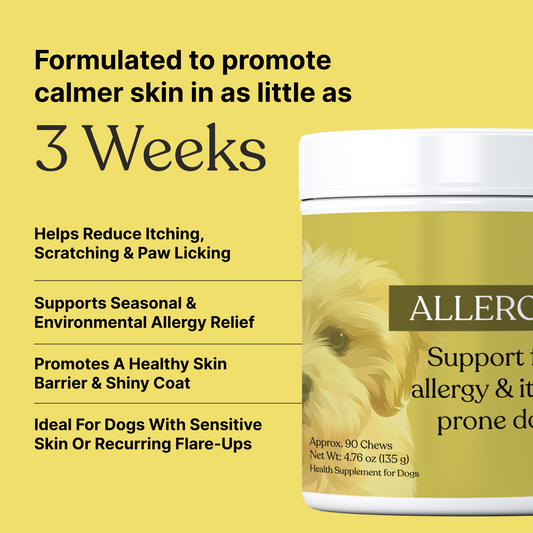
Our Allergy & Itch Chews deliver omega-3s, quercetin, and probiotics in one daily chew, providing sustained nutritional support throughout the coat building process.
Sources:
- AKC: Winter coat care, nutrition and coat quality
- Veterinary Dermatology journal: Omega-3 supplementation and coat health
- Veterinary nutrition literature on micronutrient demands during coat transition