Your Dog Can Literally Smell Your Stress


Vet Reviewed by Dr. Jacob Klos, DVM

Dog owners have always suspected it, and now science backs it up: your dog knows when you're stressed, and they know it through their nose.
The research
A 2022 study published in PLOS ONE by researchers at Queen's University Belfast found that dogs can detect human psychological stress through breath and sweat samples with approximately 93.75% accuracy. The dogs in the study were able to distinguish between samples taken before and after a stressful task, even when they had never met the person.
This means your dog isn't just "reading your body language." They are literally detecting chemical changes in your body caused by stress.
What happens in your dog's body when they detect your stress
Dogs are emotional sponges. Multiple studies have shown that dogs' cortisol levels can mirror their owners'. A 2019 study in Scientific Reports found long-term cortisol synchronization between dogs and their humans, meaning chronic owner stress was associated with elevated stress hormones in their dogs over time.
When cortisol stays elevated in dogs, the downstream effects can include:
- Immune suppression: Chronic stress can weaken immune response, making dogs more susceptible to infections, slower wound healing, and increased inflammation. For dogs with existing allergy issues, this can mean flare-ups feel harder to manage.
- Digestive disruption: The gut-brain connection in dogs is well-established. Stress can alter gut motility, change the balance of gut bacteria, and contribute to loose stools, gas, or appetite changes.
- Skin and coat changes: Elevated cortisol can worsen inflammatory skin conditions. If your dog's itching or hot spots seem to flare during high-stress periods in your household, this connection may be part of the picture.
- Behavioral shifts: Increased clinginess, restlessness, reduced appetite, excessive grooming, or withdrawal can all be signs your dog is absorbing household stress.
What you can do (for both of you)
You can't eliminate stress from your life. But you can reduce the ripple effect on your dog.
For your dog:
- Maintain routine consistency (meals, walks, bedtime) even when your schedule feels chaotic
- Add enrichment that promotes calm: sniff walks, puzzle feeders, gentle chew sessions
- Keep their nutrition steady and complete so their body has what it needs to handle stress
- Support gut health and immune function with consistent supplementation
For you:
- Your dog benefits when you regulate your own stress. Even 10 minutes of breathing, walking, or quiet time can shift the chemical signals your dog is detecting
- Notice when your stress is peaking and proactively give your dog a calming activity (a stuffed Kong, a quiet room, gentle petting)
The nutrition piece
When the body is under stress (yours or your dog's), nutritional demands increase. Vitamins, minerals, and antioxidants get used up faster. Gaps that were manageable during calm periods can become noticeable during stressful ones.
This is exactly why a daily multivitamin matters more than most owners realize.
Zinc supports immune function that chronic stress suppresses. B vitamins fuel the energy metabolism that stress burns through faster. Vitamin E and selenium act as antioxidants, helping protect cells from the oxidative damage that elevated cortisol accelerates. Omega-3 fatty acids support a healthy inflammatory response in both the gut and the skin, two of the first systems to show stress-related changes.
The problem is that even high-quality dog food may not deliver these nutrients at the levels a stressed body actually needs. That's the gap a daily multivitamin is designed to fill. Not replacing your dog's diet, but reinforcing it so their body has what it needs to stay resilient when life gets stressful.
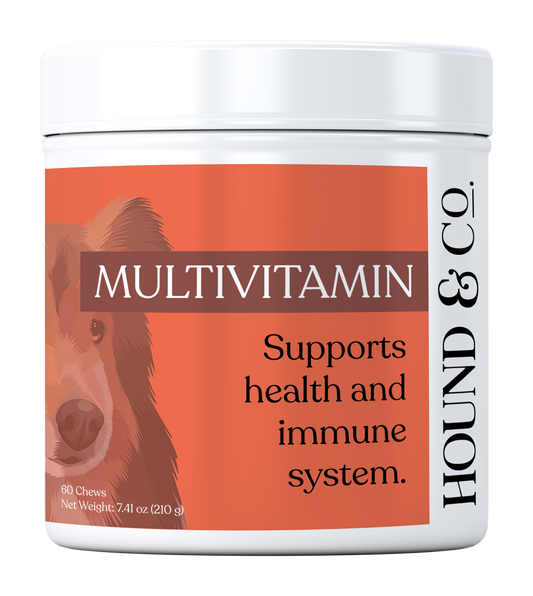
Our Multivitamin Chews were formulated with exactly this in mind: a comprehensive daily blend of vitamins, minerals, and antioxidants to support immune health, gut function, skin and coat strength, and overall vitality. One chew a day. Consistent support, especially when your dog needs it most.
The takeaway
Your bond with your dog is deeper than you realize. They're tuned into your emotional state at a biochemical level. Taking care of yourself isn't just self-care. It's dog care too. And giving your dog consistent daily nutrition is one of the simplest ways to protect them from the stress they're absorbing from you.
Sources:
Wilson et al. (2022). "Dogs can discriminate between human baseline and psychological stress condition odours." PLOS ONE.
Sundman et al. (2019). "Long-term stress levels are synchronized in dogs and their owners." Scientific Reports.
AKC: Stress in dogs, signs and management
Veterinary behavioral science literature on cortisol, immune function, and gut-brain axis in dogs