The Hidden Link Between Your Dog's Gut and Their Immune System


Vet Reviewed by Dr. Jacob Klos, DVM

If you've ever dealt with a dog who has chronic digestive issues, recurring skin problems, or seems to catch every bug going around, there's a good chance the root cause isn't where you'd expect.
It's the gut.
The Gut Microbiome Explained
Your dog's gastrointestinal tract is home to trillions of microorganisms: bacteria, fungi, and other microbes that make up what scientists call the gut microbiome. These aren't invaders. They're partners. And when they're in balance, they perform functions that affect virtually every system in the body.
The gut microbiome helps break down food and absorb nutrients. It produces certain vitamins. It communicates with the brain through what researchers call the gut-brain axis. And, perhaps most importantly, it plays a central role in immune function.
Approximately 70% of the immune system is located in the gut. The microbes living there help train immune cells to recognize threats and respond appropriately. When the microbiome is disrupted, immune function can go haywire. The result might be an overactive immune response (allergies, inflammation) or an underactive one (frequent infections, slow healing).
Signs Your Dog's Gut Health Needs Attention
Gut imbalances don't always show up as digestive symptoms. Here's what to watch for:
- Chronic loose stools or constipation.
- Excessive gas or bloating.
- Recurring ear infections or skin irritation.
- Dull coat or excessive shedding.
- Low energy or lethargy.
- Frequent illness or slow recovery.
- Food sensitivities that seem to multiply over time.
If your dog experiences several of these, their gut health is worth investigating.
What Disrupts Gut Health
Several factors can throw off the delicate balance of gut bacteria:
- Antibiotics, which kill harmful bacteria but also wipe out beneficial ones.
- Stress, which alters gut motility and microbiome composition.
- Poor diet, especially highly processed foods with low fiber content.
- Lack of dietary variety.
- Environmental toxins and pesticides.
Some disruption is unavoidable. Antibiotics save lives, and stress happens. The goal isn't perfection. It's supporting recovery and maintaining balance over time.
Supporting Gut Health From the Inside Out
Probiotics are beneficial bacteria that help replenish and maintain a healthy microbiome. Research has shown that probiotic supplementation can improve digestive function, support immune response, and even influence skin health in dogs.
Prebiotics are equally important. These are fibers that feed the good bacteria already present in the gut, helping them thrive and multiply.
Beyond supplementation, diet quality matters. Whole, minimally processed foods provide the nutrients and fibers that support a healthy gut environment. Avoiding unnecessary antibiotics when possible also helps preserve microbiome diversity.
The HOUND & CO. Approach
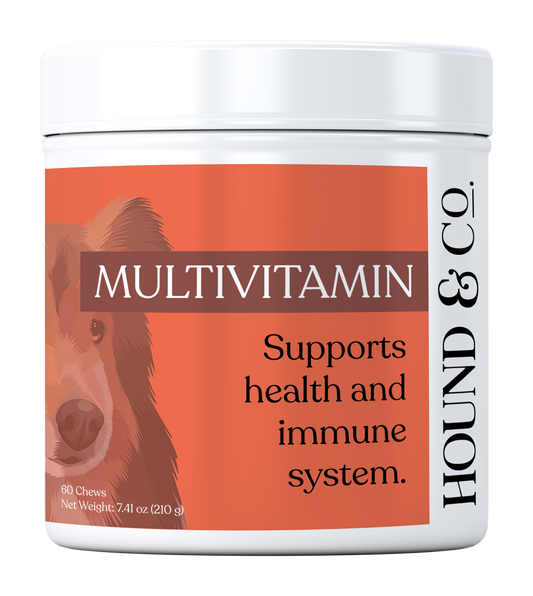
Our Multivitamin Chews were formulated with gut health as a foundational priority. The formula includes 25+ essential nutrients along with ingredients that support digestive function and overall vitality.
For dogs with specific immune or skin concerns, our Allergy & Itch Chews include probiotics alongside other supportive ingredients like quercetin and salmon oil.
Gut health isn't a quick fix. It's a long-term investment. But when you support the gut, you're supporting everything else too.