The Summer Travel Checklist for Your Dog


Vet Reviewed by Dr. Jacob Klos, DVM

Summer travel with your dog can be one of the best parts of the season. But from a health perspective, travel introduces stressors that most owners underestimate. New water sources, disrupted schedules, unfamiliar environments, and the physical stress of the journey itself all take a toll.
Here's what to prepare before you go and what to watch for on the road.
Before you leave
- Vet check: If your dog hasn't had a wellness visit in the past 6 months, schedule one before your trip. Make sure vaccinations are current and ask about any region-specific risks (tick-borne diseases, heartworm prevalence, leptospirosis).
- Pack medications and supplements: Bring enough of everything your dog takes daily, plus a few extra days' supply in case the trip extends. Don't rely on finding the same products at your destination.
- Bring familiar items: Your dog's regular food, their bed or blanket, and familiar toys reduce environmental stress. Switching food mid-trip is a common cause of digestive upset.
- ID and documentation: Ensure tags are current. Bring proof of vaccinations if crossing state lines or staying at pet-friendly lodging. Have your vet's contact information accessible.
Hydration on the road
July is National Pet Hydration Awareness Month, and travel is one of the highest-risk scenarios for dehydration.
Bring water from home. Unfamiliar water sources (different mineral content, different treatment methods) can cause digestive upset. Bringing your own water or using filtered water reduces this risk.
Offer water every 2 hours during car travel. Dogs in vehicles don't always signal thirst. Set reminders to stop and hydrate.
Carry a collapsible bowl everywhere. At rest stops, parks, beaches, and trails, access to water shouldn't be an afterthought.
Watch for signs of dehydration: Dry gums, slow skin turgor, dark urine, lethargy, and reduced appetite.
Digestive health during travel
Travel stress disrupts the gut microbiome. Combined with potential water changes, schedule disruptions, and the temptation to share human food, digestive issues are one of the most common travel problems.
Maintain meal timing as closely as possible. Even if your schedule is unpredictable, feeding at approximately the same times gives the gut consistency.
Avoid unfamiliar treats and table scraps. This is not the time to experiment with new foods. Stick to what your dog's system knows.
Support gut health with daily probiotics. A balanced gut microbiome is more resilient against the disruptions that travel introduces. Consistent daily probiotic intake before and during travel provides the most benefit.
Managing stress and immune function
Travel is exciting for some dogs and stressful for others. Either way, the body responds to environmental change by increasing cortisol production, which can suppress immune function and increase nutrient depletion.
Keep routines where possible: Walk times, meal times, and bedtime routines provide stability even in unfamiliar settings.
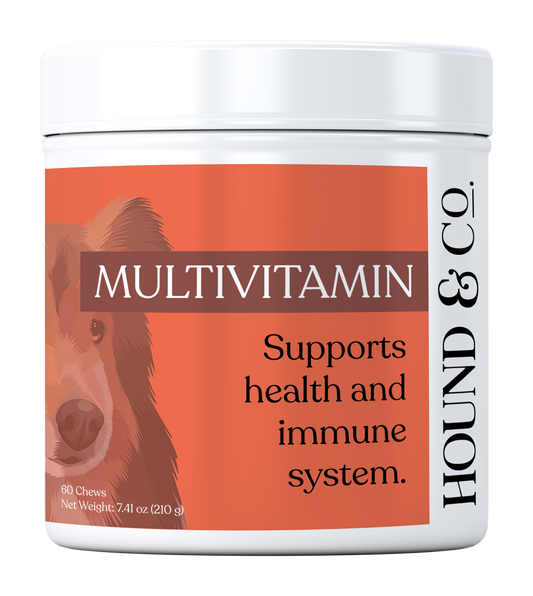
Maintain daily supplementation: Stress increases the body's demand for vitamins, minerals, and antioxidants. A daily multivitamin ensures your dog's body has what it needs to stay resilient when the environment is constantly changing.
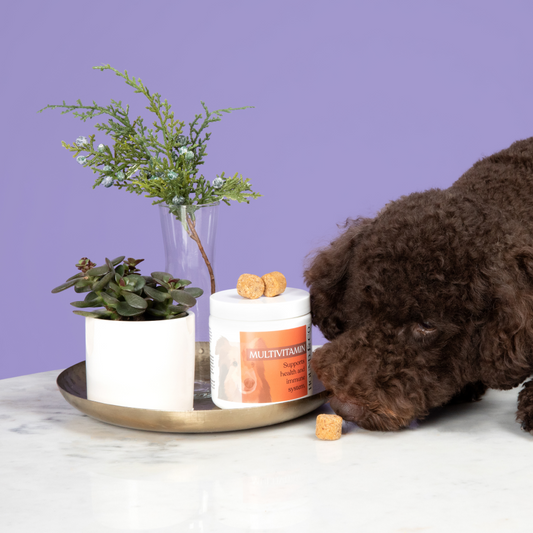
Our Multivitamin Chews support immune health, gut function, and overall wellness. They travel easily and maintain the consistency your dog's body depends on, even when everything else changes.
[Shop Multivitamin Chews]
The travel mindset
The best travel experiences with dogs happen when health preparation is as intentional as the packing list. A few extra steps before you leave can prevent the digestive disasters, dehydration scares, and stress-related issues that turn a great trip into a vet visit.
Sources:
- AKC: Traveling with dogs, pet travel safety, summer travel tips
- AVMA: Traveling with your pet guidelines
- Veterinary nutrition literature on travel-related gut microbiome disruption
- Veterinary behavioral science literature on cortisol and environmental stress in dogs